
That means a manufacturer looking at a market like India needs to decide whether small, cheap cars or small, expensive cars or both will work better for them, says Pavan Lall.
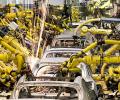
286 dealers closed down in 18 months, 32,000 jobs impacted. Maharashtra leads with 84 closures, followed by Tamil Nadu and Delhi. The worst-hit is the passenger car segment.

Since March 2020, when the Nifty50 plummeted to 7,511 following the announcement of a nationwide lockdown, the stock market has been on an upward trajectory. Over the next four years, the major market index has delivered a remarkable compounded annual growth rate (CAGR) of over 31.5 per cent. In the past year alone, the Nifty50 has gained by 27 per cent, hitting a succession of record highs.

Among the Sensex firms, ITC, Kotak Mahindra Bank, ICICI Bank, Nestle, Axis Bank, IndusInd Bank, UltraTech Cement, Bajaj Finance, Maruti and HDFC Bank were the major laggards.

Automobile dealers' body FADA on Tuesday expressed concern that the chip shortage issue could derail passenger vehicle (PV) retail sales during the festive season, as automakers are struggling with an adequate supply of vehicles to dealers due to production challenges. Terming semiconductor shortage as a "full-blown crisis", the industry body warned of a lacklustre festive season, especially for the passenger vehicle dealer fraternity, with low inventory levels and non-availability of the fast-moving model variants ahead of the peak festive period.

Experts say while the increasing demand for a ban on Chinese goods might make for good optics, the reality is that India is still heavily dependent on that country in a wide range of industries like electronics, mobile devices, auto, pharma, telecom equipment, and fertilisers.

Barring fertiliser, all seven sectors -- coal, crude oil, natural gas, refinery products, steel, cement and electricity -- recorded negative growth in July.

Nestle, State Bank of India, Power Grid, Tata Steel, Larsen & Toubro and Mahindra & Mahindra were the other major gainers. In contrast, Tech Mahindra, Axis Bank and Reliance Industries were the laggards.

Passenger vehicle sales are expected to experience muted growth in the current financial year.

Top gainers in the Sensex pack included Yes Bank, TechM, Bajaj Finance, Bharti Airtel, Maruti, Asian Paints and Hero MotoCorp - rising up to 5.30 per cent. The 50-share Nifty ended 85.65 points, or 0.79 per cent, higher at 10,948.25 points.

Among the Sensex firms, Nestle rose the most by 4.66 per cent. NTPC rose by 2.16 per cent, Reliance Industries by 1.53 per cent, State Bank of India by 1.04 per cent and Hindustan Unilever by 1.03 per cent. ITC, Power Grid and Bajaj Finance were the major gainers. Wipro, Tata Consultancy Services, HCL Technologies, Tata Steel, Bajaj Finserv and Maruti were among the laggards.

The lockdown in Maharashtra will have a catastrophic impact on April sales, as dealers will not be able to realise the potential of festivities like Ugadi, Gudi Padwa, Baisakhi and Poila Boishakh.

Durable goods companies and retailers say online sales won't compensate for the fall in offline sales.
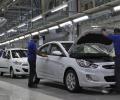
Domestic passenger vehicle (PV) sales saw a significant growth in October due to increased availability of semiconductor chips and rising consumer confidence. The sales figures during the month - which coincided with the first post-Covid festival season - released by the top ten carmakers saw a jump of 30.7 per cent to 322,885 units in October. Auto companies count wholesales - units dispatched to dealers - as sales.

While in the case of bigger cars, the industry wants the distortion with smaller cars and the tax differentials to be narrowed, it wants duties to be reduced from 24%-27% to a uniform 22% irrespective of size of the vehicle and its engine displacement.

Leading carmakers Maruti Suzuki and Hyundai witnessed a double-digit drop in sales in October on account of the global semiconductor shortage impacting production. Kia India, Honda Cars and MG Motor also saw a fall in dispatches last month as compared with October 2020. However, companies like Tata Motors, Mahindra, Nissan and Skoda managed to post positive numbers last month despite the supply chain challenges.
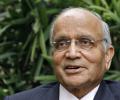
Company managements need to "curtail the kind of expenditures on themselves personally" with the COVID-19 pandemic highlighting the need to build internal resources with a frugal style of functioning, Maruti Suzuki India chairman R C Bhargava said on Tuesday. Addressing shareholders in the company's annual general meeting held virtually, he also termed as "a good development for the whole of industry" recent shareholder actions that did not approve expenditures by management on themselves, without specifying details. In the wake of the pandemic, building internal resources has to become a priority of industry and companies.

The global semiconductor shortage hit passenger vehicle sales in September, with major manufacturers like Maruti Suzuki, Hyundai and Mahindra & Mahindra reporting a decline in sales on Friday. Kia India and Honda Cars also reported a dip in wholesales last month as compared with the year-ago period. Carmakers like Tata Motors, Toyota Kirloskar Motor, Nissan and Skoda, however, reported an increase in passenger vehicle dispatches last month despite supply chain issues.

Geopolitical events, macroeconomic data and quarterly earnings of corporates would guide the stock market in a holiday-shortened week ahead, analysts said. Stock markets will remain closed on Wednesday for Ram Navami. "This week promises to be crucial for the market as fresh worries about a potential conflict between Iran and Israel emerge.

According to the data released by the Society of Indian Automobile Manufacturers (SIAM), motorcycle sales in last month declined by 9.16 per cent to 7,99,139 units from 8,79,721 units in the same month previous year.

From the Sensex basket, Asian Paints, Sun Pharma, HDFC Bank, Tata Consultancy Services, Axis Bank, Tata Steel, JSW Steel, Larsen & Toubro, ICICI Bank and Power Grid were the major gainers. Tata Motors dropped over 8 per cent despite reporting over three-fold jump in consolidated net profit at Rs 17,528.59 crore for the fourth quarter ended March 31, 2024. NTPC, Bharti Airtel, Titan, State Bank of India and Nestle were the other major laggards.

The stock of Mahindra & Mahindra (M&M) has been touching successive all-time highs on the bourses and, over the past year, gained 81 per cent. While the S&P BSE Auto Index has not performed poorly, registering gains of 73 per cent, it still trails the company by 800 basis points (bps) during this period. There are multiple reasons why investors are beating a path to M&M's counter.

Aided by robust demand, automobile retail sales in India rose by 11 per cent last year as compared to 2022, dealers' body FADA said on Monday. The overall domestic automobile retail sales stood at 2,38,67,990 units in the 2023 calendar year as compared to 2,14,92,324 units in 2022. Passenger vehicle sales stood at 38,60,268 units last year, up 11 per cent from 34,89,953 units in 2022.

Greenwashing is making misleading or false environment-friendly claims about a product. Consumers in India currently do not have any way of telling whether a claim is authentic or greenwashing. And one never hears of action against any company for making false claims of being environment-friendly.
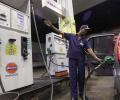
After the latest spike in crude oil prices, petrol prices could potentially go up to around Rs 90 a litre making a dent in the consumer's wallet. This, the analysts fear, will push the cost of vehicle ownership in the country, further reducing the demand potential for the industry.

Surinder Kapur's relentless pursuit of quality made Kapur a highly efficient manufacturer of automobile components.

Offering buyers a car that meets their aspirations & lifestyle needs, the Creta became a style icon. The Creta, which was officially launched on Monday, is a global model, created with an investment of more than Rs 1,000 crore.

Automobile dispatches from factories to dealerships across the country declined 23 per cent in February, as various supply-side challenges, including semiconductor shortage, and rise in vehicle prices due to the implementation of new regulations continued to impact demand scenario, industry body SIAM said on Friday. Wholesales of domestic passenger vehicles, two-wheelers and three-wheelers declined 23 per cent to 13,28,027 units last month, compared with 17,35,909 units in February 2021. Overall, passenger vehicle dispatches in February 2022 declined six per cent to 262,984 units, compared with 281,380 units in the same month of last year.

The government has deferred the implementation of the proposal to make six airbags mandatory in passenger cars by one year to October 1, 2023, Road Transport and Highways Minister Nitin Gadkari said on Thursday. The government had earlier planned to make six airbags mandatory in eight-seater vehicles for enhanced safety of occupants from October 1, 2022. "Considering the global supply chain constraints being faced by the auto industry and its impact on the macroeconomic scenario, it has been decided to implement the proposal mandating a minimum of 6 Airbags in Passenger Cars (M-1 Category) w.e.f 01st October 2023," Gadkari said in a tweet.

Ride-hailing firms claim penetration is still low and there is a huge upside to grow the market and make owning a car pass.
The biggest bounce is in the realty sector, where the industry index jumped 80%. There's been a turnaround also in automobiles and ancillaries (up 45%). The pharma and health care indices have a welcome return of roughly 35%.

Market leader Maruti Suzuki sold 51,274 units, down 49.61 per cent from the same month last year. Hyundai Motor sold 21,320 units, a decline of 49.25 per cent and Mahindra & Mahindra sold 8,075 units, down 54.54 per cent.

BJP workers depend on Annamalai's popularity to emerge victorious. He has has made 100 promises to be fulfilled in 500 days and assurances include cleaning up rivers, an international airport and food vans named after former Chief Minister K Kamaraj.
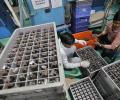
Auto component makers in India are bracing for a tough time. High absenteeism among workers owing to Covid-19, shortages of critical parts, and temporary closures of plants by automobile manufacturers have thrown a spanner in the works for the Rs 3.2-trillion sector, which derives 60 per cent of its revenues from automobile original equipment manufacturers (OEMs), with the balance split equally between replacement demand and exports. Car market leader Maruti Suzuki India on Saturday said it was extending the maintenance shutdown, which was from May 1 to 9, till May 16, "keeping in view the current pandemic situation". Some activities will continue in the plants.

'Auto, pharma, and industrials have delivered well in the recent quarter, while businesses like quick-service restaurants, consumer staples, and durables have underperformed in volume growth.'

He said Bajaj Auto is a small company and it is wasteful to create expensive concepts

Weak consumer sentiment across urban and rural markets due to slow farm inflows, subdued agri-commodity prices, rising cost of ownership as a result of regulatory changes including safety, emissions, vehicle registration, along with a rise in interest cost/EMI, have impacted demand.
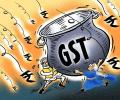
With Goods and Services Tax (GST) officers under pressure to exceed the Rs 1-trillion collection mark per month, industry has faced a barrage of recovery notices and summons issued over the last one month across sectors, according to company executives. Industry bodies have claimed harassment by field officers, blocking of input tax credit, cancellation of GST registration, threats of arrest and steep penalties, impacting their working capital and operations. Company executives pointed at an atmosphere of apprehension and fear due to such notices and summons.

The BSA Gold Star is launched....Ola Enters e-motorbikes Biz... Bajaj, TVS To Enter e2Ws Market...

Maruti Suzuki India (MSIL) does not anticipate growth in the small car segment because people continue to find these vehicles unaffordable, chairman R C Bhargava said on Wednesday. He said the market had clearly shifted towards the sport utility vehicle (SUV) segment and the company will go in the same direction. The domestic sales of utility vehicles jumped in India by 34.54 per cent to about 2 million units in FY23.
